Atlanta – Associate of Science in Radiography
Program Quick Facts
| Duration | 24 months (full-time) |
| Start Dates | January/April/June/October |
| Format | On-campus |
| Accreditation | JRCERT |
Discover
In our Associate of Science in Radiography program in Atlanta, you’ll focus on how to use radiographic equipment to produce images and help doctors diagnose patients. You’ll get professional guidance on how to capture the best images possible while minimizing radiation exposure and providing quality care that is sensitive to a patient’s physical and psychological needs. Depending on the campus, you may take fully in-person courses or choose a hybrid format that combines online learning activities with on-campus labs. Either way, you’ll also acquire hands-on experience with modern imaging equipment in real clinical settings.
With our faculty continually reviewing and updating the curriculum, we ensure our program stays at the forefront of new procedures and technologies. As a graduate, you’ll have worked to develop the technical skills and knowledge to become a valued member of the healthcare team. You’ll also be eligible to take the certification exam administered by the American Registry of Radiologic Technologists.
Develop Essential Skills In
- Patient assessment and care
- Radiographic procedures
- Imaging technologies
- Radiation safety
- Quality assurance
OnGround Delivery
The program is offered in an onground delivery model at the Asheville, Atlanta, Indianapolis, Knoxville, Nashville, and Orlando campuses. Employing an onground approach, the curriculum integrates the finest elements of face-to-face learning interactions, immersive on-campus laboratory sessions, and clinical education experiences to meet the program objectives.
Hybrid Delivery
The program is offered in a hybrid delivery model at the Asheville, Knoxville, Nashville, Orlando, and Pittsburgh campuses. Admission months for cohorts rotate. Using a hybrid learning model, the curriculum combines the best aspects of online learning activities and interactions, hands-on, on-campus laboratory courses, and collaborative clinical education experiences into an innovative and dynamic learning experience.
2025-2026 Radiography Handbook
See All Imaging Science Programs
Bureau of Labor Statistics
Tuition and Fees
Available Locations
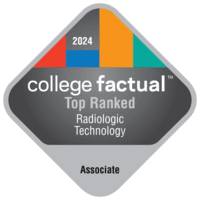
Ranked #7 in the Southeast Region 2023-2024 for Associate Level Radiography
Ranked #13 in the Nation 2023-2024 for Associate Level Radiography
Examples of Scholarships and Grants That May Be Available (Check with Your Campus Financial Aid Office For More Information)

Georgia Scholarship & Grant Programs

South College Promise

Yellow Ribbon
Hear from Our Students!
Ready For Your Next Step?
Mission
The mission of the Associate of Science in Radiography program in Atlanta is to provide undergraduate students with academic and clinical foundations to competently perform as radiographers that provide quality patient care, actively participate in the profession, possess the ability to specialize in advanced degree programs and/or imaging specialties, and pursue life-long learning.
Program Goals and Student Learning Outcomes
Graduates of this program of study will:
Program Goal #1:
The program will graduate clinically competent students.
Student Learning Outcomes:
- Students will demonstrate proper patient positioning.
- Students will exercise ALARA principles to minimize radiation exposure.
- Students will provide appropriate patient care.
Program Goal #2:
The program will graduate students who communicate effectively.
Student Learning Outcomes:
- Students will effectively communicate with patients.
- Students will effectively present to a group of imaging professionals.
- Students will demonstrate written communication skills.
Program Goal #3:
The program will graduate students who will demonstrate effective critical thinking and problem solving skills.
Student Learning Outcomes:
- Students will perform “non-routine” procedures requiring critical thinking skills.
- Students will adapt to changes and varying clinical situations.
Program Goal #4:
The program will graduate students who will demonstrate professionalism and growth.
Student Learning Outcomes:
- Students will demonstrate professionalism in the clinical setting.
- Students will abide by federal guidelines regarding patient privacy.
The program will continually monitor program effectiveness through assessment and evaluation to ensure that the needs of the community are met.
Admission Requirements
General admission to South College does not guarantee admission to the Associate of Science degree program. Applicants interested in this program are required to visit the college and meet individually with an admissions representative and program faculty to ascertain if their goals can be met by the college. Prospective students declaring Radiography as their major must be generally admitted to South College and meet the following requirements in order to be considered for full admission to the program:
Effective with any cohort beginning Fall 2025 or later, the HESI (Health Education Systems, Inc.) examination will be a mandatory component of the admissions process for the RAD program at all campuses. Applicants will be required to complete the HESI exam as part of their application to assess their readiness for the program. This examination evaluates key academic skills necessary for success in healthcare-related fields, including areas such as math, critical thinking, learning style, personality style, vocabulary, and anatomy & physiology. Additional information about the HESI is available from the RAD Department at each campus.
- Complete the South College Imaging Science program application. The application deadline is available in the Department of Radiography at the applicable campus.
- Submit documentation of a minimum high school and/or college cumulative GPA of 2.5 or above. All official transcripts must be provided.*
- Meet minimum score requirements on the college entrance examination, OR present documentation of a score of 19 or higher on the ACT Assessment examination, OR present documentation of a 900 combined score or higher on the SAT I examination, OR meet the South College requirements for admission as a transfer student.
- Obtain a minimum grade of “C” or better in one unit of high school biological or physical science. If one unit of high school science has not been earned, a college-level course in chemistry, physics, or biology is required.
- Admission to the cohort is based on the successful completion or transfer of the following prerequisite courses or their equivalents with a grade of “C” or better in a maximum of two attempts. If a student is unsuccessful in two attempts of any of the listed courses at South College, they will no longer be eligible for the program. Withdrawal from the same course twice at South College will count as a failed attempt.
- Complete BIO 1030 Anatomy & Physiology for Imaging Science or equivalent; MAT 1100 College Algebra; AHS 1010 Medical Terminology; and RAD 1125 Introduction to Imaging Sciences & Patient Care with a minimum grade of “C” or higher in a maximum of two attempts at South College.*
- Complete a communications skills course that may be met by a variety of courses including speech, English, or composition with a grade of “C” or higher in a maximum of two attempts at South College*.
- Complete a HESI-A2 assessment*. Applicants are required to take the HESI-A2 assessment as part of the application process. Effective Summer 2026, applicants must achieve a minimum composite score of 65 on the Anatomy & Physiology and Math Sections of the HESI assessment. Applicants are permitted a maximum of two (2) HESI-A2 attempts within a one-year period, beginning on the date of the initial attempt. The two-attempt limit resets at the start of each subsequent one-year period. One (1) attempt must be completed prior to cohort admission, in accordance with the established program admission deadline. For admission consideration, only HESI-A2 scores earned at South College will be accepted. Scores from other institutions are not accepted. South College will cover the cost of the first attempt when the assessment is administered at a South College campus location. Costs associated with all subsequent attempts are the responsibility of the applicant.
- For applicants seeking readmission, a retake of the exam is not required if already taken. Reentries must have taken the exam with South College within the past 2 years. Readmission eligibility will be assessed based on previous academic performance and adherence to program policies. Readmittance is at the discretion of the campus Program Director and clinical affiliate availability.
- Complete a mandatory on-ground or online information session.
- Meet specific health and/or essential functions pertinent to the responsibilities performed by the Radiographer. Drug and background screening is required by clinical affiliates. Failure to pass the screen may disqualify a student as a candidate for admission.
- Be able to commit to full participation in a rigorous educational program that requires class participation (whether onground or online depending on track), on campus lab participation, significant out-of-class preparation time, and clinical education assignments off-campus, which may require travel of 1-3 hours round trip. Some clinical rotations may occur in the evening and/or on the weekend.
*Each of these areas is used to rank applicants for full program admission. If minimum standards are met by more applying students than clinical seats, these rankings determine program admission.ards are met by more applying students than clinical seats, these rankings determine program admission.
Admittance Decisions
Applicants to any Imaging Science program are ranked based on academic scores. Emphasis is placed on math and science coursework related to the Imaging Sciences at all certificate and degree levels. The weight distribution for ranking is as follows: Science (Anatomy & Physiology, Introduction to Imaging Sciences and Patient Care) & Math: 60%, Medical Terminology and Communication: 15%, and HESI: 25%. Cohort sizes admitted are dependent on available clinical site rotations.
In addition to coursework, each student must provide proof of ability to perform the skills needed to practice in the imaging sciences effectively. Healthcare facilities must meet federal guidelines, and students must also meet these requirements in order to be allowed to gain clinical experience in these facilities. To meet these requirements, each student must supply proof of a negative TB test, hepatitis B vaccine or waiver, physical exam certifying ability to function in the required capacity, proof of immunizations (including MMR immunity), and CPR training. A criminal background check and drug screen are required for admission. If the background check reveals previous convictions, it is up to each clinical site to determine the eligibility of students to attend clinical at the site. Students who are denied clinical experiences due to past convictions may be unable to progress in the program which will result in failure to complete the required courses for the program. In any case where a drug screen is positive and an authorized prescription is not produced to validate the presence of the drug in the individual’s system, a student may be disqualified as a candidate for admission. Upon notification of the drug screen results, the student will have 5 working days to provide prescription validation. Students are responsible for costs associated with any required testing.
Professional Liability Insurance Requirement
All students must be covered under a professional liability and general liability insurance policy during all clinical education. South College has contracted to provide a student blanket medical liability occurrence policy that insures Radiography students for $3 million per incident and $5 million aggregate. The professional liability insurance expense is covered by the Institution.
Additional Information
Need to Know More About the Associate of Science in Radiography (RAD) Program? Here Are Frequently Asked Questions!
Radiography is a medical imaging technique that uses a small amount of radiation (X-rays) to create images of the inside of the body. These images, called radiographs, are used by physicians to help diagnose and plan treatments for various conditions, such as fractures and infections. During the procedure, an X-ray beam passes through the body, and the portion of the rays that is absorbed or scattered creates an image on a detector.
How it works:
- An X-ray machine sends a beam of high-energy X-rays through the body.
- Different body tissues absorb or scatter the X-rays to different degrees, with denser materials like bone absorbing more than soft tissues.
- The X-rays that pass through the body are detected, and the resulting pattern is used to create a black and white image.
- In modern radiography, the images are usually recorded on a computer.
- Sometimes, a contrast agent (like a dye) is used to make certain structures, such as blood vessels, easier to see.
What it’s used for:
- Medical: Diagnosing fractures, infections, tumors, and other conditions in areas like bones, lungs, and the heart.
- Dental: Capturing images of teeth, jawbone, and the oral cavity to identify dental issues.
- Industrial: Inspecting materials for defects without damaging the objects themselves.
- Therapeutic: Delivering high-energy X-rays to treat conditions like cancer.
Radiology is the medical specialty of interpreting medical images, while radiography is the process of creating those images, typically using X-rays. A radiologist is a medical doctor who reads and interprets scans to diagnose and treat conditions, while a radiographer is a technologist who operates the equipment to perform the scans.
Radiologist
Who they are:
A medical doctor who specializes in interpreting medical images to diagnose diseases and guide treatment.
What they do:
Read and analyze scans (X-rays, CTs, MRIs), provide diagnostic reports, and may perform interventional procedures.
Education:
Requires an undergraduate degree, medical school, and a radiology residency of several years.
Analogy:
The “detective” who analyzes the evidence from a crime scene.
Radiography Technologist
Who they are:
A trained imaging professional who operates the imaging equipment.
What they do:
Position patients, operate equipment like X-ray and CT scanners, and produce high-quality images for the radiologist to interpret.
Education:
Typically requires an associate or bachelor’s degree and a passing score on a certification exam.
Analogy: The “photographer” who takes the picture.
Studying radiography is challenging, particularly in areas like radiographic physics, bony anatomy, and positioning, but it can be very rewarding. Success depends on hard work, a willingness to learn, and finding a study style that works for you. The program involves academic coursework such as medical terminology, anatomy, radiographic procedures, and radiographic physics. The program involves practical hands-on clinical training through real world patient experiences in healthcare settings and instructor controlled radiographic laboratory settings.
Academic challenges:
Physics:
The technical level of physics in radiography can be difficult for some, requiring an understanding of the mechanics of X-ray equipment.
Anatomy and terminology:
You will need to learn a significant amount of detailed anatomy and medical terminology.
Positioning:
Mastering the technical skill of correctly positioning patients for images is a key part of the curriculum.
Practical and physical challenges:
Hands-on work:
Radiography programs include a significant amount of clinical training, which can be physically demanding and require direct patient contact to include positioning and movement of patients.
Pace:
The program is often fast-paced but organized, requiring you to stay on schedule.
Emotional and mental demands:
The job can expose you to graphic circumstances and injuries, which can be emotionally difficult for some.
No, this is not an all online program. Some of our campuses offer this as an all on-ground and in person program and, some campuses also offer a hybrid option meaning some coursework can be completed synchronously online.
The hybrid version of this program is offered at the Asheville, Knoxville, Nashville, and Pittsburgh campuses currently. The Atlanta, Dallas, Indianapolis, Marietta, and Orlando campuses are currently only offered on-ground and in person.
The Associate of Science in Radiography program offered by South College is designed for completed in 24 months full-time. This length could vary depending on the prior academic background of applicants who have already completed prerequisite courses and accepted for transfer credit.
Yes. Please scroll up on this page to see more information for those who qualify.
Accreditation
Asheville
The South College Associate of Science in Radiography program offered at the Asheville campus is accredited by the Joint Review Committee on Education in Radiologic Technology (JRCERT), 20 North Wacker Drive, Suite 2850, Chicago, Illinois, 60606-3182; phone (312) 704-5300; www.jrcert.org. In January 2025, the program was awarded accreditation for a period of 8 years. The next site visit is tentatively scheduled for 2032. General program accreditation information and the current accreditation award letter can be found on the JRCERT website at https://www.jrcert.org/programs/south-college-asheville/.
Atlanta
The South College Associate of Science in Radiography program offered at the Atlanta campus is accredited by the Joint Review Committee on Education in Radiologic Technology (JRCERT) 20 N. Wacker Drive, Ste. 2850, Chicago, IL 60606-3182, (312) 704-5300; www.jrcert.org. The program’s current award is probation. General program accreditation information and the current accreditation award letter can be found on the JRCERT website at https://www.jrcert.org/programs/south-college-atlanta/.
Dallas
The South College Associate of Science in Radiography program offered at the Dallas Campus is in the process of seeking accreditation from the Joint Review Committee on Education in Radiologic Technology (JRCERT), 20 North Wacker Drive, Suite 2850, Chicago, Illinois, 60606-3182; phone (312) 704-5300; www.jrcert.org.
Indianapolis
The South College Associate of Science in Radiography program offered at the Indianapolis campus is accredited by the Joint Review Committee on Education in Radiologic Technology (JRCERT), 20 North Wacker Drive, Suite 2850, Chicago, Illinois, 60606-3182; phone (312) 704-5300; www.jrcert.org. The program was considered at the March 19, 2024 meeting of the Joint Review Committee on Education in Radiologic Technology and was awarded Accreditation for period of 3 years. The next site visit is tentatively scheduled for 2026. General program accreditation information and the current accreditation award letter can be found on the JRCERT website at https://www.jrcert.org/programs/south-college-indianapolis/.
Knoxville
The South College Associate of Science in Radiography program offered at the Knoxville Campus is accredited by the Joint Review Committee on Education in Radiologic Technology (JRCERT), 20 N. Wacker Drive, Ste. 2850, Chicago, IL 60606-3182, (312) 704-5300, www.jrcert.org. In September 2025, the program was awarded continued accreditation for a period of 5 years. The next review is anticipated in 2030. General program accreditation information and the current accreditation award letter can be found on the JRCERT website at https://www.jrcert.org/programs/south-college-knoxville/.
Marietta
The South College Associate of Science in Radiography program offered at the Marietta Campus is in the process of seeking accreditation from the Joint Review Committee on Education in Radiologic Technology (JRCERT), 20 North Wacker Drive, Suite 2850, Chicago, Illinois, 60606-3182; phone (312) 704-5300; www.jrcert.org.
Nashville
The South College Associate of Science in Radiography program offered at the Nashville Campus is accredited by the Joint Review Committee on Education in Radiologic Technology (JRCERT), 20 N. Wacker Drive, Ste. 2850, Chicago, IL 60606-3182, (312) 704-5300, www.jrcert.org. In 2025, the program was awarded accreditation for a period of 8 five years. The next review is anticipated in 2033 2028. General program accreditation information and the current accreditation award letter can be found on the JRCERT website at https://www.jrcert.org/programs/south-college-nashville/.
Orlando
The South College Associate of Science in Radiography program offered at the Orlando Campus is accredited by the Joint Review Committee on Education in Radiologic Technology (JRCERT), 20 North Wacker Drive, Suite 2850, Chicago, Illinois, 60606-3182; phone (312) 704-5300; www.jrcert.org. The program was considered at the September 9, 2025 meeting of the Joint Review Committee on Education in Radiologic Technology and was awarded Accreditation for period of 3 years. The next site visit is tentatively scheduled for 2028. General program accreditation information and the current accreditation award letter can be found on the JRCERT website at www.jrcert.org.
Pittsburgh
The South College Associate of Science in Radiography program offered at the Pittsburgh campus is accredited by the Joint Review Committee on Education in Radiologic Technology (JRCERT), 20 North Wacker Drive, Suite 2850, Chicago, Illinois, 60606-3182; phone (312) 704-5300; www.jrcert.org. The program was considered at the October 18, 2024 meeting of the Joint Review Committee on Education in Radiologic Technology and was awarded Accreditation for period of 3 years. The next site visit is tentatively scheduled for 2027. General program accreditation information and the current accreditation award letter can be found on the JRCERT website at https://www.jrcert.org/programs/south-college-pittsburgh/.