
Explore Your Future in Rehabilitation Sciences
South College’s Live From South College podcast continues to shine a spotlight on programs shaping the future of healthcare — and few areas demonstrate that impact more clearly than Physical Therapy and Occupational Therapy.
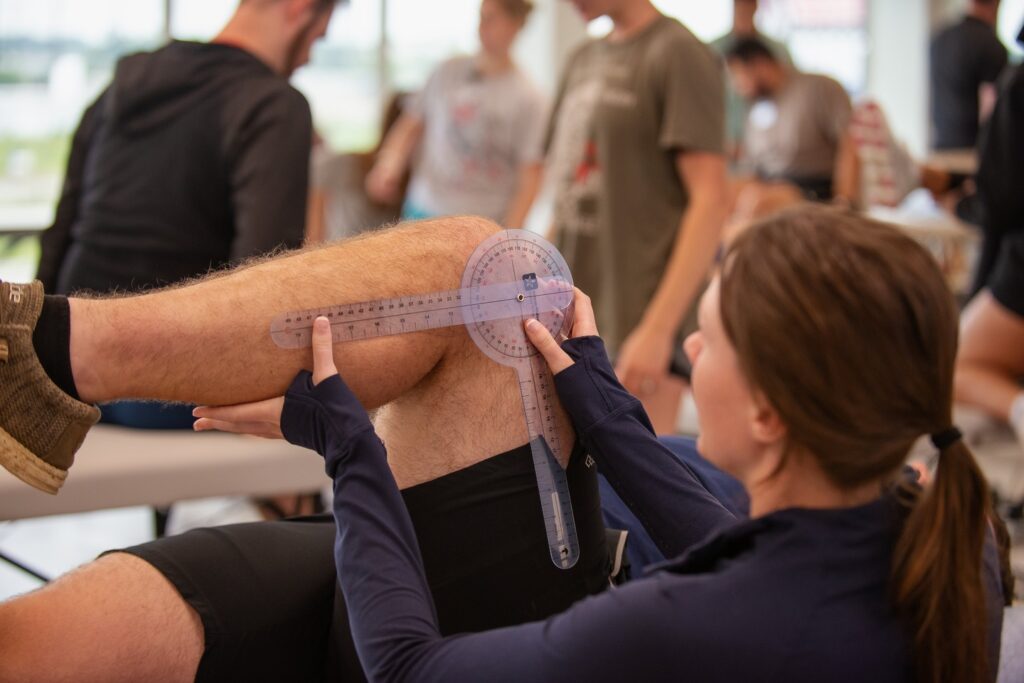
What’s the Difference Between Physical Therapy and Occupational Therapy?
Rebuilding Strength, Independence, and Purpose: Inside South College’s Rehabilitation Sciences with Dr. Christina Odeh and Dr. Harold Mitchell
In a recent Circle of Excellence episode, host Kathleen Stockham sat down with two leaders in the field: Dr. Christina Odeh, Dean of Graduate Health Programs for South College, and Dr. Harold Mitchell, faculty instructor for the Doctor of Occupational Therapy.
Together, they offer a deeply human look at the students, the science, and the purpose-driven commitment behind helping people regain movement, independence, and quality of life.
The Lifelong Impact of Rehabilitation Sciences
Rehabilitation professionals often enter the field for personal reasons — and their work touches every corner of the lifespan.
As Dr. Odeh notes, physical and occupational therapists are central to patient recovery, helping individuals rehabilitate after injuries, illness, genetic conditions, or developmental delays. But their work extends far beyond recovery.
“We’re seeing people turn to physical therapy for prevention, performance, and wellness,” she explains. “Every student comes in with a strong why — an experience that sparked their passion.”
South College’s suite of programs serves this entire continuum of care:
- Doctor of Physical Therapy (DPT)
- Doctor of Occupational Therapy (OTD)
- Associate of Science Physical Therapist Assistant (PTA)
- Associate of Science Occupational Therapy Assistant (OTA)
And while these tracks intersect in the clinic, each discipline offers a distinct focus and purpose.
Inside the Doctor of Physical Therapy: A Hybrid, High-Energy Pathway
As one of South College’s most recognized programs, the DPT draws students who are often easy to spot on campus — energetic, motivated, and always on the move.
Why the popularity? Dr. Odeh points to three key drivers:
1. A societal shift toward movement and wellness
With more active lifestyles and an aging population, the demand for movement experts is soaring.
2. Personal experiences that ignite passion
Many students enroll after witnessing the impact of physical therapy firsthand — through a family member, friend, or their own recovery.
3. A best-of-both-worlds hybrid format
Students complete most coursework online, then travel to campus for immersive lab sessions lasting several days or weeks.
“These immersions are where you’ll see them running around, working hands-on, and really bonding,” she says. “It gives them flexibility without sacrificing clinical readiness.”
The program’s accelerated two-year timeline adds to its appeal, offering a fast lane to a doctoral degree at campuses in Knoxville, Nashville, and Atlanta.
PTA & OTA: Front-Line Partners in Care
While DPT and OTD graduates lead the clinical care team, the PTA and OTA programs empower students to build the hands-on support skills that make rehabilitation possible.
PTA: A Fast-Track Entry into Physical Therapy
The Physical Therapist Assistant program:
- Takes roughly 2 years overall with 1.5 years in the major
- Prepares graduates to deliver one-on-one patient care under the direction of a physical therapist
- Offers diverse career pathways, from clinic management to eventual enrollment in a DPT bridge program
“The career trajectory is wide,” Dr. Odeh says. “And for many, PTA becomes a stepping stone to becoming a physical therapist.”
OTA: Enabling Patients to Live Fully – Every Day
Where PTAs focus on movement, OTAs focus on function — the everyday tasks that make life meaningful.
- Dressing
- Cooking
- Workplace skills
- Using adaptive equipment
- Childhood developmental milestones
“You can’t separate the body into parts,” she explains. “There’s overlap in these professions, but OT really centers on helping patients live independently.”
Becoming an Occupational Therapist: The Doctoral Pathway
South College’s Doctor of Occupational Therapy (OTD) is one of its newest advanced programs — and one of its most forward-thinking.
Dr. Mitchell describes it as a fully integrated, immersive experience that blends:
- Online didactic coursework
- In-person lab immersions
- Two 12-week clinical fieldwork rotations
- A culminating capstone experience
(focused on leadership, advocacy, or scholarship)
“Think of the OTD as a professional boot camp,” Dr. Mitchell says. “It’s rigorous, but it’s incredibly rewarding.”
Students move through a reversed lifespan curriculum — starting with older adults and ending in pediatrics — ensuring they can treat patients of all ages.
Who makes a strong OTD applicant?
According to Dr. Mitchell:
- A 3.0 GPA
- Completion of key prerequisites (Anatomy & Physiology, Psychology, Statistics, Medical Terminology)
- At least 24 hours of observation under a licensed OT (virtual or in person)
- A passion for service and collaboration
The program is available through both the Atlanta and Knoxville campuses.
The Personal Stories Behind the Profession
Both guests shared powerful personal stories that shaped their careers.
Dr. Odeh: A High School Realization
Her journey began as a teenager, watching therapists work with her baby cousin with cerebral palsy.
“I knew early that this is what I wanted,” she recalls. “I’ve been a PT for over 30 years — this field is my passion.”
Dr. Mitchell: Inspired Through Pediatric Therapy
He, too, discovered OT through a young family member diagnosed with cerebral palsy.
“I saw interventions that looked like play,” he says, “but the progress was incredible. It changed the trajectory of her life — and mine.”
These formative experiences shape the empathy, mentoring, and purpose they now bring to South College students.
Leading with Innovation, Compassion, and Purpose
As Dean, Dr. Odeh’s vision is clear: help students find what excites them — whether that’s athletes, pediatrics, geriatrics, research, or community care.
“It’s more than a degree,” she emphasizes. “We’re helping people discover their purpose while preparing them to change lives.”
Dr. Mitchell echoes that mission, adding that OT is uniquely adaptable:
“You can work in clinics, communities, schools, or create your own business. You can design the lane that fits you.”
A Final Word: Find the Path That Resonates
For anyone considering a career in rehabilitation sciences, this episode highlights a powerful truth:
There is no single “right” path — only the path that aligns with your passion to help others regain independence, dignity, and possibility.
Whether you pursue an associate or doctoral degree, whether you love hands-on care or big-picture advocacy, South College has a pathway for you.
And as both educators made clear, you won’t be walking alone.
Here Are Quick Facts: South College Student Support
- More than 20,000+ students across all campuses and online programs
- 10 campuses in 7 states + online learning options
- 3,000+ faculty and academic staff supporting student success
- Robust tutoring services available on-ground and online
- 160+ subjects covered through 24/7 tutoring via Tutor.com
- On-demand academic support accessible through the student portal
- Writing, math, science, and tech labs available for multiple programs
- Alumni mentorship opportunities available through the Alumni Association
- Student-first culture focused on personalized support and engagement